
Three flavors. Five uses each. Zero stress when the school calls during dinner prep.
If you’re juggling work calls, homework meltdowns, and dinner prep all at once (hi, same), this post is for you. Herb butter might sound fancy, but it’s actually one of the easiest ways to add flavor and calm to your kitchen. I’m sharing three seasonal blends—each with five uses—plus a simple how-to that fits into real life, glitter mess and all.
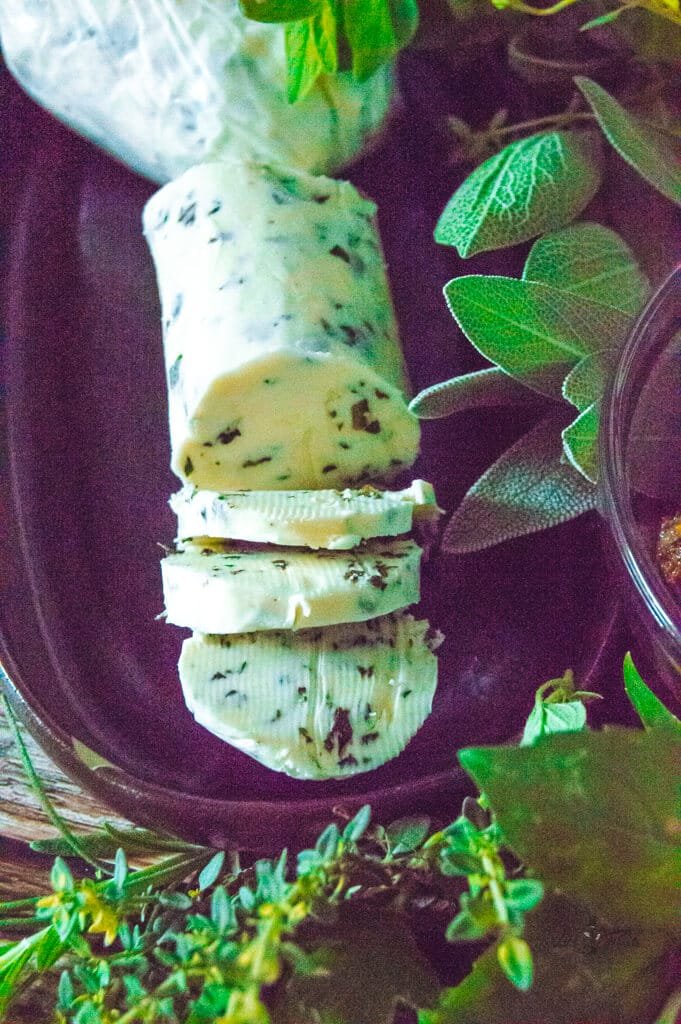
Let me tell you about the moment I knew I’d officially entered my “herb butter era.” It started with a Zoom call—one of those high-stakes onboarding negotiations where I’m trying to sound composed while simultaneously scanning the dining room, which had become a war zone. My youngest was knee-deep in a “project” he either forgot to tell me about or saw on YouTube and decided was wise to attempt midweek. There were cardboard scraps, glue sticks, and a suspicious amount of glitter. Meanwhile, my oldest was spiraling over a homework assignment she didn’t understand (and I didn’t either, if we’re being honest), and I was mentally inventorying the fridge for anything that could pass as dinner. Thankfully, I’d harvested the last of the garden over the weekend—rosemary, thyme, sage, chives—and had the foresight to turn them into herb butters. That tiny act of preparation saved dinner, my sanity, and possibly my marriage.
These little flavor bombs are my shortcut to looking like I planned dinner—when really, I just remembered I had a log of Autumn Harvest Butter in the fridge. They’re fast to make, easy to freeze, and they turn even the most basic meal into something that tastes like you tried. (You did try. You just tried last weekend when you made the butter.)
Basics of How to Make Herb Butter
- Soften 1 cup of unsalted butter.
- Chop 2–3 tablespoons of fresh herbs (harvested before the first freeze if you’re seasonal like that).
- Mix with ½ tsp salt and any extras.
- Roll into a log, wrap in parchment, and chill.
- Slice and use like the domestic goddess you are.
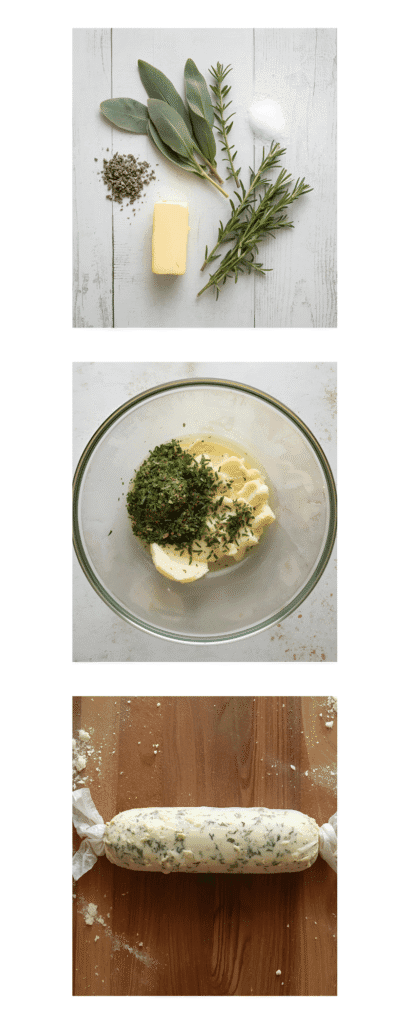
Here are my three go-to blends for fall, each with five ways to use them. Because if I’m going to make something, it better multitask harder than I do.
🍂 Autumn Harvest Butter
This one smells like fall and tastes like you roasted something for hours. Rosemary, thyme, cinnamon, nutmeg, and a whisper of maple syrup. It’s cozy, woodsy, and perfect for anything orange or root-shaped.
Use it for:
- Roasted carrots, parsnips, or sweet potatoes
- Cornbread (especially the boxed kind you pretend is homemade)
- Wild rice or sautéed mushrooms
- Butternut squash soup that came from a carton
- Toast with sharp cheddar when dinner is “snack board night”
Autumn Harvest Butter
- Total Time: 10 minutes
- Yield: 1/2 cup 1x
Description
Smells like fall. Tastes like you roasted something for hours
Ingredients
- 1/2 cup (1 stick) unsalted butter, softened
- 1 tsp fresh rosemary, finely chopped
- 1 tsp fresh thyme, finely chopped
- 1/4 tsp ground cinnamon
- Pinch of nutmeg
- 1 tsp maple syrup
- 1/4 tsp salt
Instructions
- Let butter soften until spreadable.
- Mix in herbs, spices, maple syrup, and salt until evenly combined.
- Shape into a log, wrap tightly, and chill until firm.
- Slice as needed and use on roasted veggies, cornbread, rice, or soup.
- Prep Time: 10 minutes
- Category: Weeknight Shortcut
- Cuisine: Modern American
🦃 Sage Poultry Butter
This is the butter that makes your turkey taste like Thanksgiving—even if it’s just Tuesday and you’re roasting a chicken because you forgot to defrost the salmon. Sage, garlic, parsley, and salt. No lemon, no fuss.
Use it for:
- Rubbing under the skin of any poultry you’re brave enough to roast
- Melting into mashed potatoes (boxed or real, no judgment)
- Stirring into stuffing when you’re feeling festive
- Brushing onto dinner rolls before you pretend you baked them
- Grilled pork chops when you want to impress your in-laws

Sage Poultry Butter
- Total Time: 10 minutes
- Yield: 1/2 cup 1x
Description
Makes Tuesday chicken taste like Thanksgiving
Ingredients
- 1/2 cup (1 stick) unsalted butter, softened
- 1 tbsp fresh sage, finely chopped
- 1 tbsp fresh parsley, finely chopped
- 1 small garlic clove, minced
- 1/4 tsp salt
Instructions
- Soften butter until spreadable.
- Stir in herbs, garlic, and salt until smooth.
- Shape into a log, wrap, and chill.
- Use under poultry skin, in mashed potatoes, or on dinner rolls.
- Prep Time: 10 minutes
- Category: Holiday Shortcut
- Cuisine: Comfort Food
🌱 Simple Chive Butter
Bright, grassy, and the easiest of the bunch. No lemon, no garlic—just chives and salt. It’s the butter I reach for when breakfast needs saving or the baked potato looks sad.
Use it for:
- Scrambled eggs that need a glow-up
- Baked potatoes (especially when dinner is “whatever’s in the fridge”)
- Toast or English muffins when you’re out of jam
- Steamed green beans that your kids will still refuse to eat
- Grilled steak or salmon when you remembered to defrost something

Simple Chive Butter
- Total Time: 5 minutes
- Yield: 1/2 cup 1x
Description
Bright, grassy, and the easiest of the bunch.
Ingredients
- 1/2 cup (1 stick) unsalted butter, softened
- 1 tbsp fresh chives, finely chopped
- 1/4 tsp salt
Instructions
- Let butter soften.
- Mix in chives and salt until evenly blended.
- Shape into a log, wrap, and chill.
- Slice and use to rescue eggs, toast, baked potatoes, or grilled meats.
- Prep Time: 5 minutes
- Category: Everyday Butter
- Cuisine: Everyday Cooking
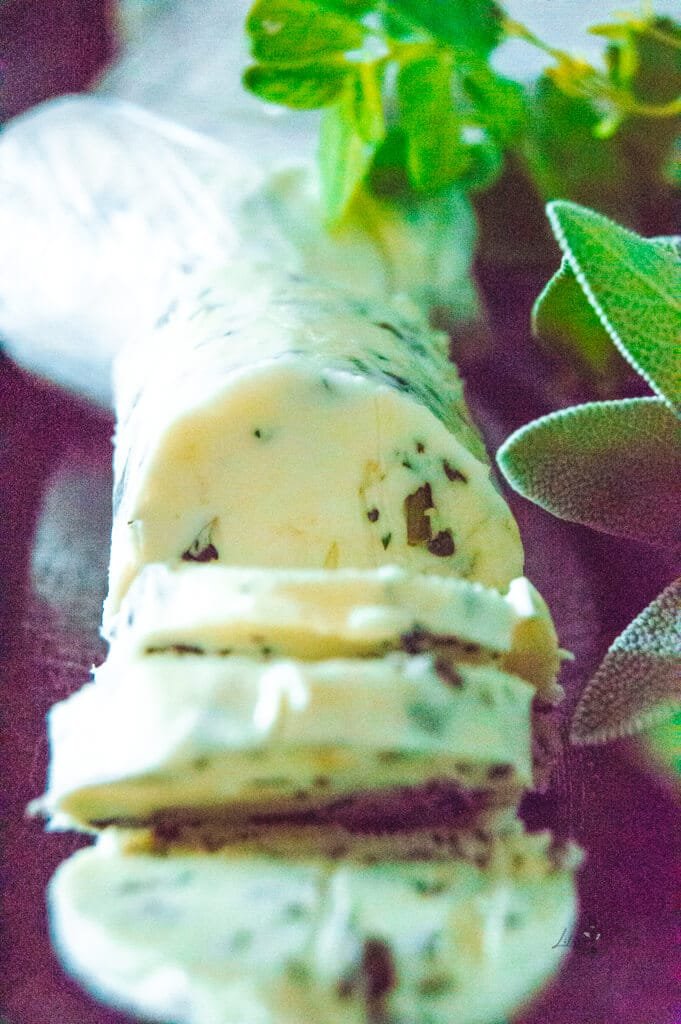
I keep mine labeled in the fridge like tiny flavor scrolls—neatly rolled promises of culinary salvation. They’re my secret weapon: ready to rescue dinner from blandness, elevate breakfast to something brunch-worthy, or simply trick me into believing I’ve got my life together. And let’s be honest, that illusion? It’s half the battle. Because when the day’s chaos spills into the kitchen, a swipe of herb butter on toast or a dollop stirred into pasta feels like a small, defiant act of grace. A reminder that even in the mess, flavor—and a little bit of magic—is always within reach.
FAQ’s for Herb Butter
Yes, but with caution. Dried herbs are more concentrated, so use about one-third the amount. The flavor won’t be as vibrant, but it’ll still add depth—especially in the Sage Poultry Butter.
In the fridge: up to 2 weeks. In the freezer: 3–4 months. Wrap tightly in parchment or plastic wrap, label clearly, and slice off what you need like a flavor scroll.
Slice off a round and let it melt directly onto hot food—steamed veggies, grilled meat, warm toast. No need to thaw the whole log.
Nope. Use what you have. Unsalted gives you more control, but salted works too—just taste before adding extra salt.




Leave a Reply